
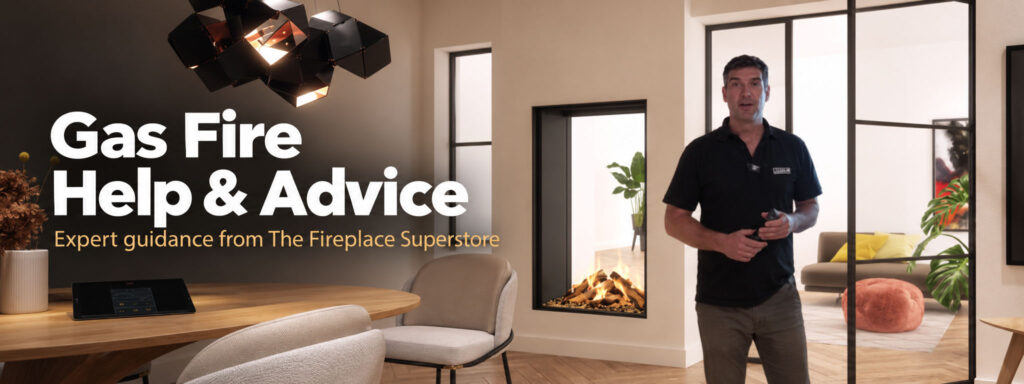
Ask Richard: Gas Fire Help and Gas Fire Media Wall Advice
When choosing a new gas fire involves more than simply finding a design of your choice. The correct fire will depend on your living space, chimney or flue, heat requirements, preferred style and the type of installation you are planning.
Richard Bailey, the store manager at The Fireplace Superstore, can help you understand the different options and choose a gas fire that is suitable for your home. Whether you are replacing an existing fire, creating a completely new fireplace or planning a gas-fire media wall, careful advice at the beginning can make the whole project much easier.
Is A Gas Fire The Right Choice?
Gas fires provide real flames and controllable heat without the work involved in storing and burning wood. Many of todays modern gas fires combine impressive flame pictures with efficient heating and convenient remote-control operation.
There are many options, gas fires are available in a wide choice of styles, including:
- Traditional inset gas fires
- Contemporary hole-in-the-wall fires
- Glass-fronted gas fires
- Conventional-flue gas fires
- Balanced-flue gas fires
- Freestanding gas stoves
- Built-in landscape fires
- Two-sided and three-sided gas fires
- Gas fires designed for media walls and feature walls
The best choice will depend on your pesonal preference and the type of chimney, flue or outside wall available.
Do I Need a Normal Chimney for a Gas Fire?
Not every gas fire requires a traditional chimney over the years gas fire designs have provided many options for homes with or without a chimney. Different gas appliances are designed to work with different flue systems, so identifying what is available in your property is one of the first steps.
Conventional-Flue Gas Fires
A conventional-flue gas fire normally uses an existing chimney or a suitable purpose-built flue to safely remove combustion gases from the property.
Before choosing a fire, the chimney and flue should be checked by a trained fireplace installer to establish whether they are suitable for the appliance being considered.
Balanced-Flue Gas Fires
A balanced-flue gas fire does not normally require a traditional chimney. Instead, it uses a sealed flue system that draws air from outside and expels combustion gases outdoors, many companies now provide a wide range of highly efficient Balanced Flue Fires.
Depending on the model and the property, the flue may pass horizontally through an outside wall or vertically through the roof. This can provide greater flexibility when creating a new fireplace or gas-fire media wall.
The permitted flue route and terminal position must be checked carefully for the particular appliance and property.
The Fireplace Superstore highly recommend Dru Fires manufactured in the Netherlands amongst many other European and Uk based manufactures.
Glass Fronted Gas Fires Or Open Fires
Open-fronted gas fires offer the character and appearance associated with a traditional open fire. However, glass-fronted models are generally designed to provide greater control over the combustion process and can offer improved efficiency. We would generally always recommend a glass fronted for the greater efficiencies.
In todays market place modern glass-fronted gas fires can create an extremely realistic flame effect while allowing more heat to be directed into the room.
Richard can explain the practical differences between the available models and help you decide which option best suits your home. We would always recommend a showroom visit to view our vast range of live fire displays.
Choosing the Correct Heat Output
A gas fire should be selected for the room in which it will be installed. A fire that is too small may not provide the warmth you expect, while an unnecessarily powerful appliance may make the room uncomfortable. Please bring your room size in to store or by email and we will advise your best option.
The appropriate heat output can be influenced by:
- The size and shape of the room
- Ceiling height
- The age of the property
- Insulation levels
- The number and size of windows
- Whether the room is open-plan
- The presence of outside walls
- Other sources of heating in the property
Manufacturer figures provide useful guidance, but discussing your room and intended use with an experienced adviser can help you make a more informed choice as every situation differs .
Gas-Fire Efficiency
The efficiency of a gas fire tells you how effectively it converts the fuel it uses into heat for the room. However, the highest percentage is not always the only consideration. Gas fires of days gone by would only have an average of 2.5 to 3kw output with a good percentage of heat going up the chimney as an old fashioned original coal fire situation.
You should also think about:
- The fire’s actual heat output
- How frequently it will be used
- Whether it is mainly decorative or a significant heat source
- Flame adjustment and heat settings
- The size of the room
- The type of flue system required
- The purchase and installation costs
A highly efficient fire may be particularly useful when the appliance will be used regularly for heating. If the main priority is creating an impressive focal point, the appearance and flexibility of the flame picture may be equally important.
Explaining a Gas-Fire Media Wall?
A gas-fire media wall combines a television and built-in gas fire within one carefully designed feature wall. It can also include shelving, alcoves, lighting, sound equipment and storage.
Unlike many electric-fire media walls, a gas-fire media wall must incorporate a combustion appliance and flue system. This means the design requires specialist planning and cannot be treated as a purely decorative building project.
The fire, television and wall should be planned together before construction begins.
Can a Television Be Fitted Above a Gas Fire?
In some installations, a television can be positioned above a gas fire, but this depends entirely on the appliance, installation method and manufacturer’s instructions. Our trained installers generally build a steel framed dummy chimney breast with heat resistant plasterboard due to the excessive heat output from many of todays gas fires.
Gas fires produce real heat, and excessive heat can damage a television or shorten its working life. The design may therefore need to include:
- The correct distance between the fire and television
- A suitable television recess
- Non-combustible materials
- Heat deflection or heat-management features
- Ventilation openings where required
- Safe routes for cables and electrical connections
- Access for future servicing and repairs
Never assume that a layout used with an electric fire will automatically be suitable for a gas fire. The fireplace manufacturer’s instructions and the television manufacturer’s guidance must both be considered. Our installers regard a electric fire media wall as a completely different product installation type.
How High Should the Television Be?
The television should be positioned at a comfortable viewing height from the main seating area. One of the most common media-wall mistakes is placing the television too high because insufficient space was allowed between the fire and screen.
Before deciding on the position, consider:
- The television size
- The viewing distance
- The height of the seating
- The required clearance above the gas fire
- Whether the television will sit flat or be angled
- The space required for a sound bar
- The overall proportions of the wall
A slightly lower fire or a wider gap between the appliances may create a more comfortable and balanced arrangement, this is generally a good conversation to have with the installer on the day or before installation.
Choosing The Perfect Gas Fire for a Media Wall
Landscape gas fires are particularly popular for media walls, but the largest fire is not always the best choice. The fire should suit the width of the wall, the size of the television and the proportions of the room.
Gas media-wall fires can include:
- Front-facing designs
- Corner models
- Two-sided fires
- Three-sided fires
- Extra-wide landscape fires
- Different log, stone or ember fuel effects
- Adjustable flame and heat settings
- Remote-control operation
A three-sided fire can produce an impressive panoramic view of the flames, while a front-facing model may create a cleaner and more understated appearance. There are many options and again a showroom visit would be very advantages.
Planning the Flue Route
The flue route is one of the most important parts of a gas-fire media wall. Its position can influence the location of the fire, the depth of the finished wall and the internal construction.
A balanced flue may pass through an outside wall or travel vertically, depending on the appliance and building. Bends, maximum flue lengths and the location of the outside terminal are all governed by the chosen fire’s installation instructions.
This should be assessed before the media-wall framework is built. Choosing the fire first allows the wall to be designed around the actual appliance and its flue requirements. There are many variations of flue positioning are installers would always advise on your best option.
Building Materials and Ventilation
The area surrounding a gas fire must be constructed using materials approved for the particular appliance and installation.
Ordinary timber, plasterboard or decorative finishes may not be suitable close to the fire. Heat-resistant and non-combustible boards may be required, together with specified clearances and ventilation openings.
The exact construction will vary between manufacturers and models. The installer should always work from the current instructions supplied with the chosen appliance.
Access for Servicing
A gas fire requires appropriate access for servicing, maintenance and possible future repairs. This is especially important when the appliance is built into a media wall.
A design may look extremely neat when completed, but it should not permanently conceal essential components or make the fire difficult to remove when necessary. The Fireplace Superstore would always advise on a regular service especially in the summer months.
Service access should be considered for:
- The gas connection
- Controls and internal components
- The flue connection
- Ventilation areas
- Electrical supplies used by the fire
- Decorative panels surrounding the appliance
Planning access from the beginning can prevent damage and additional expense later.
Gas Supply and Installation
The existing gas supply must be suitable for the chosen appliance. A larger gas fire may require a different supply arrangement from a smaller inset model.
All gas-related work must be carried out by a suitably qualified Gas Safe registered engineer. The installer will need to check the appliance, gas supply, flue, ventilation and completed installation.
The fire should never be selected solely on appearance without confirming that it can be correctly installed in the intended location.
Servicing and Looking After Your Gas Fire
Regular servicing helps keep a gas fire operating safely and correctly. It also allows the appliance, flue, seals, ventilation and flame performance to be checked.
Always follow the manufacturer’s servicing instructions and use a qualified Gas Safe registered engineer.
You should arrange for the appliance to be checked if you notice:
- Difficulty lighting the fire
- The fire repeatedly switching off
- Unusual smells or sounds
- Sooting or marks around the appliance
- A significant change in the flame appearance
- Damage to the glass, fuel bed or controls
Do not attempt to alter the fuel bed, logs or internal components yourself unless the manufacturer’s instructions specifically allow it.
What Information Should I Bring to the Showroom?
The more information you bring, the easier it is for Richard and the showroom team to help you explore suitable options.
Useful information includes:
- Photographs of the room and existing fireplace
- The width and height of the available wall
- Details of the chimney or flue
- The position of any outside walls
- Room dimensions
- Television size
- Preferred fire width and style
- Plans or drawings for a proposed media wall
- Details of any existing gas connection
- Photographs of the outside of the property where a flue may terminate
Initial advice can be offered from photographs and measurements, although a proper site assessment may still be required before installation.
Why Visit The Fireplace Superstore?
Our store is possibly the largest luxury fireplace showroom in the UK, with many actual live burning displays.
Seeing gas fires operating in person can make choosing much easier. Photographs and videos do not always show the true depth of the fuel bed, the movement of the flames or the scale of the appliance.
At The Fireplace Superstore in Poulton-le-Fylde, you can compare different gas-fire designs and discuss your plans with an experienced team.
Richard can help you consider:
- Which fires may be suitable for your property
- The differences between conventional and balanced flues
- Appropriate fire sizes and heat outputs
- Front-facing, corner and three-sided designs
- Gas-fire media-wall layouts
- Television and fire positioning
- Installation and servicing requirements
- The overall appearance of the completed feature wall
Ask Richard Before You Start Building
Early planning will always be an advantage to keep the installation cost down rather than changing before the construction is completeted.
The best time to ask for advice is before the media wall, chimney breast or fireplace opening is constructed.
Selecting the appliance first means its dimensions, clearances, ventilation, flue route and service access can be incorporated into the design. This reduces the risk of having to alter the finished structure later.
Bring your ideas, room photographs and measurements to The Fireplace Superstore and ask Richard for friendly, practical guidance.
Ask Richard — expert help with gas fires and gas-fire media walls from The Fireplace Superstore in Poulton-le-Fylde.
