Flexible flue liners

Graded Flexible Flue Liners 

A  stainless steel flexible twin-skinned flue liner also known as a Quattro is for use in a class 1 chimney.  When a chimney inspection as failed or the draw is insufficient  or not performing effientlly a flue liner should be installed. The Fireplace Superstore always recomend installing a flue liner when fitting a wood burning or multifuel appliance.

Multi-fuel flexible liners are used in a traditional class 1 chimney. A liner consists of a smooth inner layer and a corrugated outer. Both layers are joined by a lock jointing system to withstand a wood and solid fuel stove or fire. A multi-fuel flexible liner can also be used for gas and oiled fires.

Graded flue liners available are 316/316 904/316 and 904/904

316/316 Graded flue liner. This liner as Iner and outer skins both made from 316 grade stainless steel and comes with a 10 year guarantee (replacement product only) . The 316 is suitable for for use with the following fuels: seasoned dry logs, coal, coke, cured dry peat, some smokeless fuels and gas.

904/316 Graded flue liner. This liner as a 904 graded Iner and  316  graded outer skin both made  stainless steel and comes with a 20 year guarantee (replacement product only) . The 904/316 is suitable for for use with the following fuels: seasoned dry logs, coal, coke, cured dry peat,  smokeless fuels and gas. This liner is recomended for use with smokeless fuels.

904/904 Graded flue liner. This liner as a 904 graded Iner and 904 graded outer skin both made  stainless steel and comes with a 20 year guarantee (replacement product only) . The 904/904 is suitable for for use with the following fuels: seasoned dry logs, coal, coke, cured dry peat,  smokeless fuels and gas. This liner is recomended for use with all smokeless fuels. The high grade flue liner is ideal for overnight burning and heavy usage of your stove.

How to fit a top plate and top clamp

When fixing the flue liner to the top of the chimney stack the chimney pot must be removed then the top plate and top clamp are used together for the installation, and then the chimney pot reiinstalled.


Line adaptor

The line adaptor is used to connect  a flexible flue liner to the the vitreous flue pipe of the top of your stove  or the base of the flue. The line adaptor manufactured from 316 grade stainless steel. There are two skins on the top of the adaptor the liner connects between these two skins. The strain when sweeping is reduced due to the inner skin being slightly longer to prevent snagging.

 Increase line adaptor

Increase adaptors are used to the flexible flue liner to the vitreous flue pipe coming of the top of your stove or at the base  of the flue. As with a normal line adaptor the strain on sweeping is reduced due to the inner skin being slightly longer to avoid snagging.

Self tapping screws are required when connecting the liner to the adaptor. Holes must be drilled through the outer adaptor to securely fasten the liner in place. Fire cement must now be used as a  sealant between the outer skin and adaptor.

Moisture and deposits will stay on the inside the of the flue pipe due to a hole on the inner adaptor allowing any moisture inside the liner to drain.

When installing a solid fuel stove there must be access to sweep through the stove. On many stove this can be completed by removing the baffle plate at the top of the stove, if this is not possible a vitreous flue pipe must be installed with a sweeping hatch.

Facts about coal

Coal / Known As Rank

Coal is composed from oxygen hydrogen and carbon, and formed from vegetation, the coal seams are formed from the consolidation between other rock strata, all altered by a microbial action pressure and extreme heat over a long period.

Coal is classically known as “rank” this is based on the transformation of a original plant material to carbon.

Below are the ranks of coal with little carbon to a larger percntage of carbon 

Low rank are Liginite and sub bituminous, and Hard coal is Bituminous and Anthacite

Due to the varied heat produced from coals they are used for different purposses, anthracite is generally used for domestic and industrial heating,(smokeless fuels are poduced from this.)

What is Smokeless manufactured Fuel?

When burning smokeless fuel it will only produce 5g of smoke per hour. This works with the clean air act guidlines, you can burn smokeless fuel anywhere in the UK including all smokeless zones.

Anthracite is a very popular naturally occuring  smokeless fuel ideal because of the high heat out put and long burn time.

Many cosumers prefer smokeless manufactured coals like Homefire due to a more asthetic flame picture compared to anthracicte which as a subdude flame. Manufactured fuels are made up from anthracite and other products like house coal, this produces a easier to light and a better flame for a more enjoyable fire.

What Are The Avantages Of Smokeless Fuels?

Smokless fuel makes life easier with less refuling required due to the longer life of the fuel and will also produce a more intense heat. From the green prespective the less smoke produced this will will help the environment. Smokeless coal will lower emissions by  about 20% less CO2 than everyday house coal.

Choosing a fireplace to suite your chimney

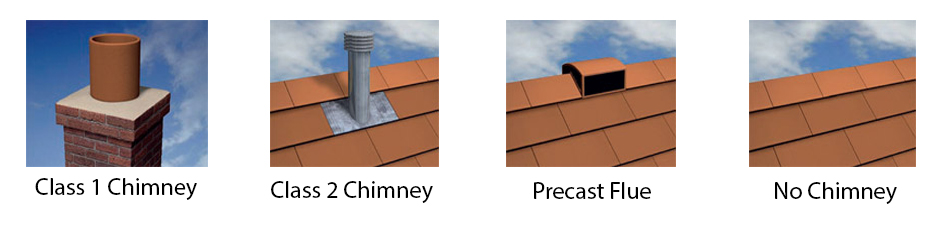
Before choosing your new fireplace you must determine what fire you can install in your home. With new technology there are many new products available in the marketplace for both modern and traditional homes. The Fireplace Superstore advise a installation survey to determine the correct fire to suite your class of chimney and advice on the quality of your chimney to evaluate if a flue liner is required. If your home as no chimney there are options available including balanced flue and power flue fires.

Class 1 

Older houses built before 1960 would commonly have a class 1 chimney with a 7″ (180mm) diameter or larger flue. Usualy consisting of a brick built “stack” situated on a external or a internal wall. A class 1 chimney can contain multiple flues for  gas or solid fuel fires, with each fire flue working individually and not sharing.

With a class 1 chimney you can install all types of fires and fireplaces including all types of gas fires providing the unit will fit in to your chimney breast, solid fuel fires inset and freestanding wood and multi-fuel stoves will normally fit in to a chimney. ( Excluding some European wood burning stoves that may require a larger flue size).

Class 2

A class 2 flue 5″ (127mm) diameter can be found in new homes and older homes built from 1960 onwards where the existing chimney as been lined with a propietary steel flue or a new house with a steel flue built in. There are many gas fires available for a class 2 flue from many companies including Legend, Paragon, Kinder, and Flavell, all subject to the depth of the chimney fireplace.

Class 2 Precast

A precast flue will be often found in new homes and houses built later than 1960, consisting of a precast concrete chimney system. Only specific gas fires can be used in a pre cast flue (solid fuel fires can not be installed). Many companies now supply eye catching slimline gas fires to suite the shallow depth in this type of flue.

No Chimney

Many modern new homes and extensions are built with no chimney. There are many options now available in the marketplace including electric fires, flueless fires, power flue fires (external wall required) . Balanced flue glass fronted gas fires are now very popular with many leading companies including Dru who have developed  high end fires to fit in many situations including bedrooms, Kitchens, loft conversions and many other places. You can now install fires up to 1.5 meters wide or tall to go in corners, panoramic viewing windows and tunnel fires for views in to a through room. Balanced flue systems draw air from the outside for combustion and and then expel gases to the outside as well.

A fireplace can now be created in almost any living room with a specially-made replica chimneybreast. These breast are made of steel and heat resistent board and modelled to fit each fire installation.  If there is no outside wall the flue can be installed vertically through the roof if structurally appropriate. With the new Dru powervent system you can extend even further, this opens up the option of having gas fire in the most accessible locations.

Media Wall Bespoke Chimney Breast Case Study

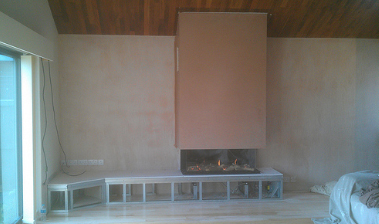
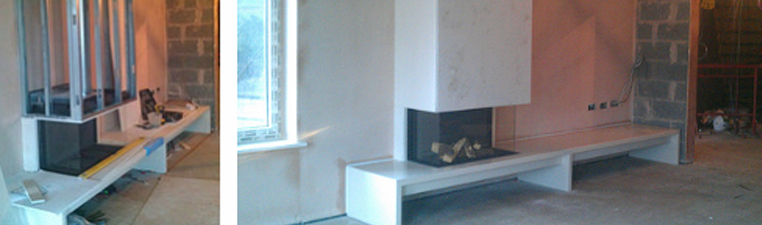
Specially made bespoke chimney breasts are constructed and modelled to suite your fireplace and fire installation using steel and heat resistant board, when the balanced flue gas fire is installed on a out side wall the flue pipe fits 1 metre above the fire and though the wall, alternatively the pipe fits up and out. Bespoke chimney breast can also be constructed when a existing chimney breast needs more depth to suite the fire, more often applicable when a continental wood burning appliance is installed.
Highly efficient gas fires with generous out puts can now fit in homes with no chimney.

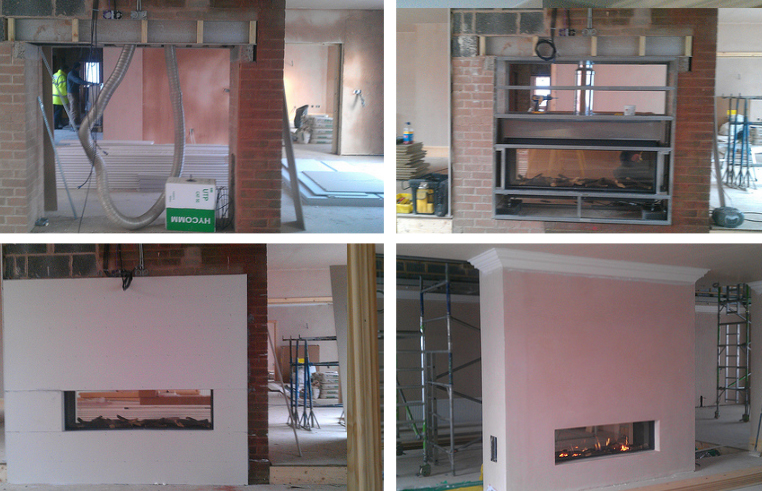
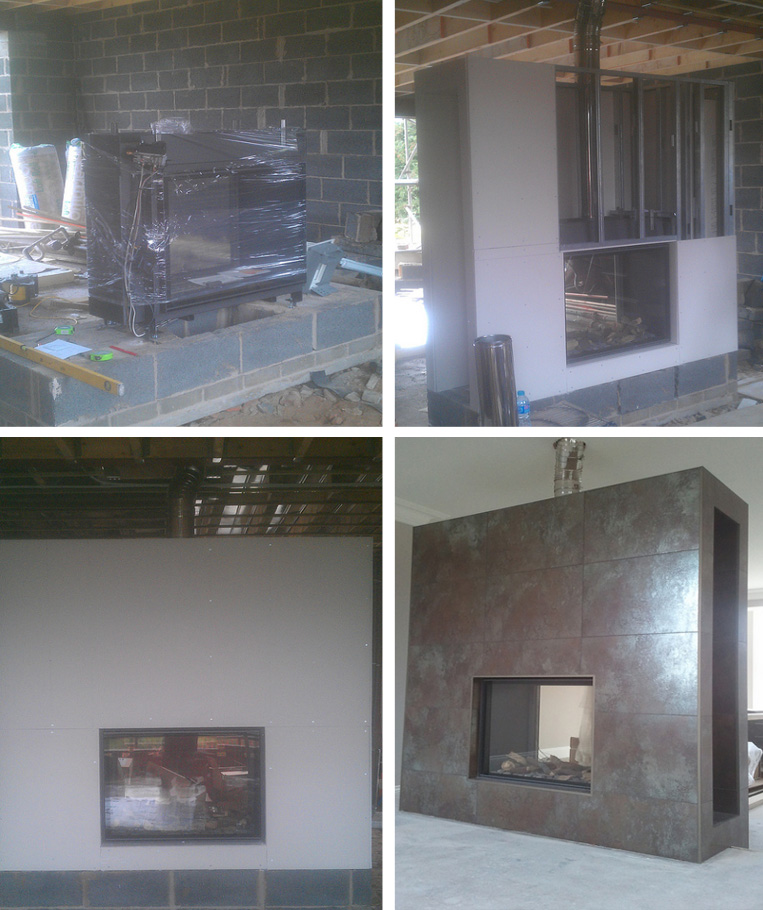
Below are just a few examples of how a Bespoke chimney breast constructed to fit with your choice of gas fire.

A Bespoke chimney breast with side features installed with the Dru Metro 100 XT3 3 sided balanced flue gas fire.

A Bespoke replica chimney breast with a marble base available in many colours and materials with the
A Bespoke chimney breast and base with black granite top with the Dru Metro 130 XT3 3 sided.

The Dru Metro 130 XT3 3 sided shown with side vents to distribute the heat from the gas fire. (more choices in vents are available.)

The Dru Metro 130 XT Tunnel gas balanced flue gas fire installed in a existing class 1 chimney breast.
Kal Fire Heat Pure 105
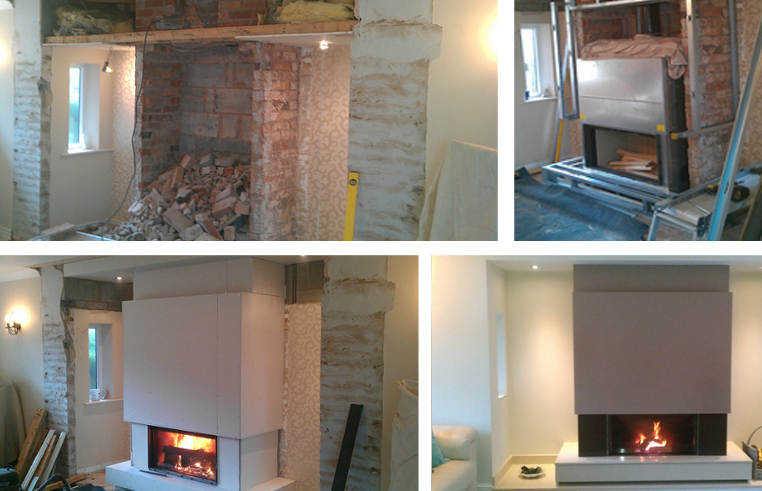
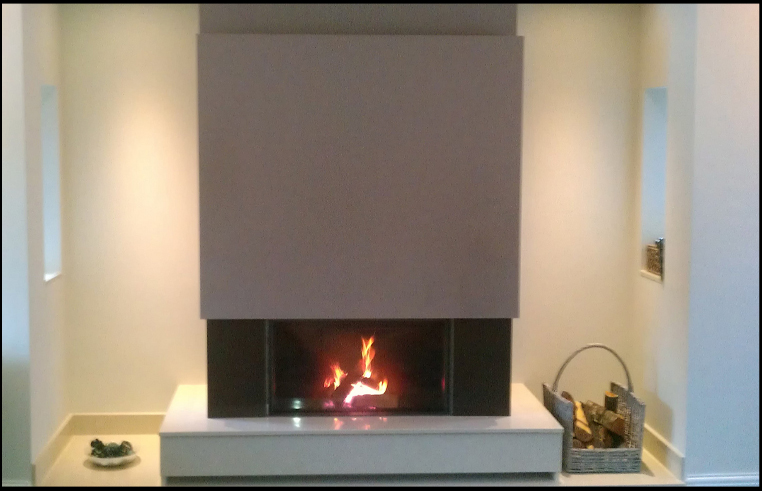
Wood burning stove installed in to existing chimney where the chimney breast as been extended to suit the depth of the fire box.
The Kal Fire Heat Pure 105 wood burning stove installed with marble and granite cladding